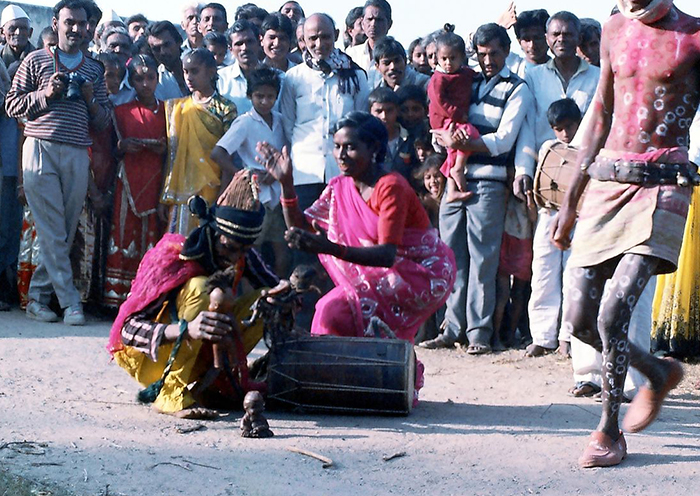
South Asian Hijra (Third Gender)
The Rich Histories of Hijras and Transgender Cultures in South Asia.
For millennia, South Asian societies have maintained a complex and often sophisticated understanding of gender, one that transcends the rigid binary of “male” and “female”, which has come to dominate modern Western discourse. At the heart of this non-binary legacy lies the Hijra community, a group whose cultural contributions, spiritual significance, and social identity span many thousands of years.
Hijra in Hindi, and Urdu:
• हिजड़ा (Hijṛā) in Hindi
• ہیجڑا (Hijra) in Urdu
Who Are the Hijras?
Hijras are frequently referred to as a “third gender” in South Asia, encompassing individuals assigned male at birth who adopt feminine gender roles, as well as intersex and some transgender people. While this term does not correspond directly with Western LGBTQ+ identities, Hijras are regarded, both culturally and legally, as being distinct from cisgender men and women.
Predominantly found in India, Pakistan, Bangladesh, and Nepal, Hijras form unique communities with their own kinship structures, customs, and social hierarchies. They have achieved legal recognition as a third gender in countries such as India (2014), Pakistan (2009), and Nepal (2007). However, their existence and cultural relevance precede these contemporary legal acknowledgements by centuries, if not millennia.
Ancient Roots: Mythology and Sacred Texts
South Asian mythology and sacred literature offer numerous references to gender fluidity and non-binary identities. The Hindu epic Mahabharata, for example, introduces us to Shikhandi, born female but raised and living as a man, as well as Arjuna, who adopts the persona of the woman Brihannala during a period of exile. Lord Shiva is frequently depicted in the form of Ardhanarishvara — half male, half female, symbolising the divine unity of both masculine and feminine energies.
These narratives are not merely anecdotal. They reflect an underlying philosophical and metaphysical framework wherein gender is understood as a spectrum and, at times, a sacred duality. Such representations suggest that traditional South Asian societies accommodated gender diversity with a degree of nuance and reverence largely absent from colonial and postcolonial regimes.
Mughal and Colonial Eras
During the Mughal era (16th–19th centuries), Hijras often held esteemed positions within royal courts, serving as advisors, emissaries, and custodians of harems. Their perceived neutrality in gendered spaces afforded them a unique role in governance and ritual life.
This status deteriorated drastically under British colonial rule. The Criminal Tribes Act of 1871 labelled Hijras as inherently “criminal,” targeting them for surveillance, exclusion, and forced assimilation. Colonial administrators imposed rigid, Victorian notions of gender and morality, undermining longstanding indigenous understandings, and driving Hijras into the margins of society.
Hijras and Spiritual Power
Historically, Hijras have been viewed not merely as social outliers, but as individuals imbued with shakti, a form of spiritual energy. They are often called upon to bless newborns and newlyweds, believed to bestow fertility and prosperity. Their presence at key life-cycle events is not only considered auspicious but indispensable, owing to their perceived status between male and female, life and death, sacred and profane.
Their rituals and blessings carry significant symbolic weight, reflecting cosmologies in which gender transcendence is not an aberration but a source of power and sacredness.
Colonial Legacies and Contemporary Resistance
The colonial period left a legacy of stigmatisation and criminalisation which persisted well into the modern era. Anti-sodomy laws (such as Section 377 of the Indian Penal Code, repealed in 2018) and public morality statutes disproportionately targeted Hijras and gender non-conforming individuals.
Nevertheless, Hijra communities have continued to resist marginalisation. From the late twentieth century onwards, they began organising politically and demanding recognition. A landmark victory came in the form of the Indian Supreme Court’s NALSA judgment (2014), which affirmed the legal status of transgender persons as a third gender, and granted them the right to access social welfare and affirmative action.
Beyond Hijras: Other Transgender Traditions in South Asia
The Hijra identity represents but one expression of gender diversity across the region. Numerous other traditions challenge the male-female binary:
- Jogappas (South India): Devotees of the goddess Yellamma, who take on feminine gender roles regardless of their assigned sex at birth.
- Shiv-Shaktis: Male-bodied individuals believed to be possessed by the feminine divine, performing religious functions and assuming feminine expressions.
- Aravanis: Especially prominent in Tamil Nadu, linked to the myth of Aravan, and honoured annually in the Koovagam festival, one of the world’s largest transgender gatherings.
Similar gender-diverse traditions exist across Asia. In Pakistan, Khwaja Sira is a culturally resonant term with pre-colonial roots, often preferred over “transgender.” In Thailand, the term kathoey denotes transgender women and effeminate men, exemplifying a wider Southeast Asian ethos of gender fluidity.
Reclaiming Indigenous Wisdom
In contemporary discourse, it is increasingly acknowledged that global trans and non-binary movements are not novel phenomena, nor are they Western exports. Rather, they are part of ancient traditions that colonialism sought to, and is still trying to erase.
The Hijra community, despite centuries of persecution, endures as a symbol of resilience and spiritual potency. Their continued cultural presence challenges the very notion of gender as fixed, binary, or biologically determined.
Relearning What Was Always Known
As global conversations around gender identity, and rights advance, it is essential to recognise that Western societies are not forging new paradigms, but rather catching up with ancient truths long held by others. The histories of Hijras and related communities remind us that gender diversity is neither new nor deviant. It is deeply human, deeply sacred, and deeply historical.
By rediscovering and honouring these rich traditions, we not only rectify historical wrongs but also unlock older, wiser ways of understanding ourselves. Ways in which difference is not feared, but celebrated.
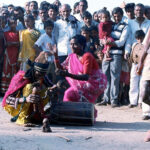
© Yann Forget / Wikimedia Commons, CC BY-SA 4.0, https://commons.wikimedia.org/w/index.php?curid=6187058